
There is no shortage of uranium on the planet.

India's IT Ministry sources state the country will not slow down its Artificial Intelligence development, distinguishing its focus on people-centric applications from global concerns over frontier models. The government acknowledges AI safety risks and is tightening incident reporting norms, with IT Minister Ashwini Vaishnaw emphasising regulation for user safety.
The Nuclear Power Corporation of India Ltd has postponed the expected date of commissioning of the first unit of Kudankulam Nuclear Power Plant to next month
Prime Minister Manmohan Singh on Saturday opposed 'artificial restrictions' on the peaceful use of nuclear technology

India is strengthening the naval component of its nuclear triad with Navy Chief Admiral Dinesh K Tripathi on Tuesday saying that the third indigenous nuclear-powered submarine 'Aridaman' will be commissioned soon and that his force is focusing on boosting its overall combat prowess.
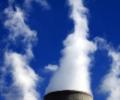
Indian Oil Corp, the nation's largest oil firm, will set up a Rs 10,000 crore (Rs 100 billion) nuclear power plant in association with Nuclear Power Corp of India Ltd.

'We were in a heavily nuclearised environment. China had tested for Pakistan in the 1980s and helped their missile programme stay just one step behind us.'
Nuclear power forms a big part of energy production in some countries.
The share of nuclear power in India's energy basket could go up from 3 per cent to 6-10 per cent over the next 25 years, according to industry experts.
Amid increasing uncertainty over the India-United States civilian nuclear agreement, a senior International Atomic Energy Agency official has said that nuclear energy is the way forward for the booming economies of India and China. The growth of nuclear power in China and India over the next two decades will outpace other countries, said Yury Sokolov, deputy director general and head of the Department of Nuclear Energy, IAEA.

Indian Oil Corp (IOC), nation's largest oil firm, is likely to sign a joint venture agreement with Nuclear Power Corporation of India (NPCIL) this month to foray into nuclear power generation.

India and Russia are expected to unveil a major nuclear energy partnership during Vladimir Putin's visit, potentially involving Russian small modular reactors and expanded cooperation as India pushes toward its 100-GW nuclear goal by 2047.
Let's take a look at some nations, including India, that depend on nuclear power to provide energy needs.
India's target of nuclear power generation of 20,000 megawatt by 2020 has been quietly lowered by the Nuclear Power Corporation of India Limited (NPCIL), the only government agency setting up the nuclear power plants in the country, to 11,080 MW.

Construction major L&T is gearing up to expand its footprint in the global nuclear supply chain, a senior company official has said, while calling for amendments to key legislations on the domestic front to pave the way for the entry of private players and foreign capital necessary for capacity enhancement.
Strongly favouring nuclear power, Prime Minister Manmohan Singh on Wednesday said there would be no compromise on safety of atomic plants and it would be harmful to close the additional source of energy.
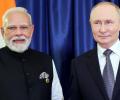
The Russian cabinet has cleared the signing of a memorandum of understanding (MoU) to deepen bilateral cooperation with India in civil nuclear energy during President Vladimir Putin's visit to the country.

India and the US signed a historic agreement to cooperate in civil nuclear energy sector in October 2008.

AIIMS Jammu is poised to become the first hospital in India to receive armed security from the Central Industrial Security Force (CISF) due to its strategic location near the India-Pakistan international border. This move marks a significant shift in security policy for healthcare facilities, which the Ministry of Home Affairs had previously resisted. The CISF is also slated for deployment at Kolkata Metro and Donyi Polo Airport.
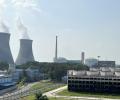
Extending its nuclear power plant supply relationship with India to the non-nuclear sector, Russia's integrated atomic power major Rosatom State Corporation is in talks for a 50:50 additive technology joint venture.
Prime Minister Manmohan Singh on Tuesday said that nuclear power was an essential component of India's energy mix and he will ensure that the safety and livelihoods of people are not jeopardised in its pursuit.

"We are in discussions with NPCIL for incorporating a joint venture for setting up a nuclear power plant. NPCIL will have a minimum of 51 per cent stake in the joint venture while ONGC would have a maximum of 49 per cent," a company official said.

India's peak power demand is projected to hit 270 GW this summer, surpassing last year's record of 250 GW.
Forty domestic companies, including the Videocon group, Jindal Power and Tata Power, have formed a group to convince the central government to allow private participation in generation of civilian nuclear energy.
The US has categorically told Pakistan that it would not get any atomic power plant or civilian nuclear deal on the lines of the one signed with India.

The operator's liability in the case of an incident is limited to 3,000 crore for reactors with thermal power above 3,600 Megawatt; 1,500 crore for reactors with thermal power between 1,500 Mw and 3,600 Mw; 750 crore for reactors with thermal power between 750 Mw and 1,500 Mw; 300 crore for reactors with thermal power between 150 Mw and 750 Mw; and 100 crore for reactors having thermal power up to 150 Mw, fuel cycle facilities other than spent fuel reprocessing plants and transportation of nuclear materials.
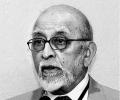
M R Srinivasan focused on the peaceful use of nuclear power at a time when the popular view among the 'hawks' was that India should build a nuclear arsenal as a deterrent.

Donald Trump is claiming he prevented a war between India and Pakistan, a statement that has been repeatedly made by the former US President despite denials from India.
SK Jain, who heads NPCIL and Bhavini, tells Vandana Gombar Ayyagary and Sumana Guha Ray about how NPCIL is best placed to take India's nuclear power ambitions forward.
Contrary to perception, the cost of nuclear power based on imported fuel and equipment will be "comparable" to that from the conventional power plants, says Shreyans Kumar Jain, chairman and managing director of the Nuclear Power Corporation of India.

Three milestones in three days signal India's growing mastery in next-generation strategic technologies spanning nuclear deterrence, hypersonic propulsion and precision stand-off strike capability.

The Indian government has introduced a bill to overhaul the civil nuclear sector, allowing private participation and establishing a new liability regime. The SHANTI Bill, 2025, aims to repeal existing acts and address industry concerns.
"It is time to recognise that nuclear power is not a clean, safe or affordable source of energy," said the letter written by nine laureates including Archbishop Desmond Tutu, Adolfo Perez Esquivel and Jose Ramos Horta.

Any military response to a cross-border terror attack from Pakistan will have to take into account the new alignments beginning to take shape in the region, points out former foreign secretary Shyam Saran.

India's 500 MWe Prototype Fast Breeder Reactor (PFBR) at Kalpakkam in Chennai has achieved first criticality, marking a significant advancement in the country's nuclear energy capabilities and long-term energy security.

Former CIA Analyst, Larry Johnson, said on Friday that US President Donald Trump asked US chairman of the joint chiefs of staff, Dan Caine, if they could use the nuclear weapons, but the latter denied.

India and Australia have signed significant agreements covering civil nuclear energy, maritime security, and critical minerals, reinforcing their partnership's role in ensuring a peaceful Indo-Pacific. The pacts facilitate uranium supply from Australia to India and enhance cooperation in defence, cyber, and critical technologies.
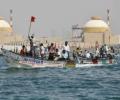
Reviving their anti-nuclear stir, leaders of People's Movement Against Nuclear Energy on Friday began an indefinite fast at Idinthakarai to press for implementation of some of their demands including scrapping plans to set up units 3 and 4 of Kudankulam Nuclear Power Plant.
India's power demand rose 4.5 per cent year-on-year (Y-o-Y) to 143 billion units (BUs) in January, marking the highest consumption for the month since 2010, primarily on the back of severe cold wave conditions across northern and eastern regions of the country.

'Listing leads to greater transparency and shareholder oversight.'
